


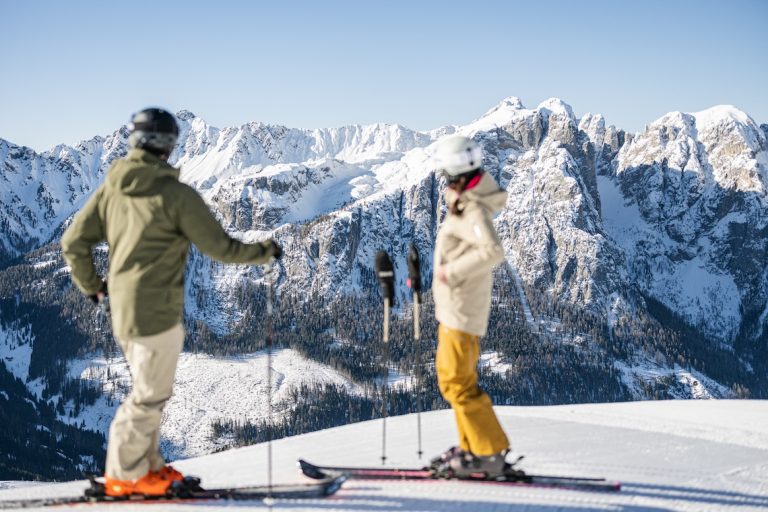
The Dolomites are home to the world’s largest ski destination, the Dolomiti Superski, which encompasses 12 ski regions, 1,200km of slopes, and 450 lifts, all of which is accessible with a single ski pass.
Here, you’re skiing amongst mountains that never fail to make an impression with their towering spires and shifting colours. Spectacular in summer, in winter, they take on a mystical quality. The jagged mountain peaks appear tamed by the graceful veils of snow which envelops them, while blankets of white quiet the chaotic appearance of the scree slopes underneath.
This is a land of legends, where giants, witches, dwarves, mystical eagles, and powerful kings are around every corner. And when you’re there, it’s easy to see where these stories come from. The peaks resemble the battlements of castles, while the valleys seemed carved by forces beyond our comprehension. It’s a place where spectacle and sagas are weaved together.
Among the crowning jewels of Dolomite skiing are the two world-renowned ski touring circuits, the Sellaronda and the Grande-Guerra, which let you traverse valleys, passes, and slopes while absorbing ancient legends, modern history, and breathtaking mountain views through a UNESCO World Heritage site along the way.
Ski touring routes in the Dolomites
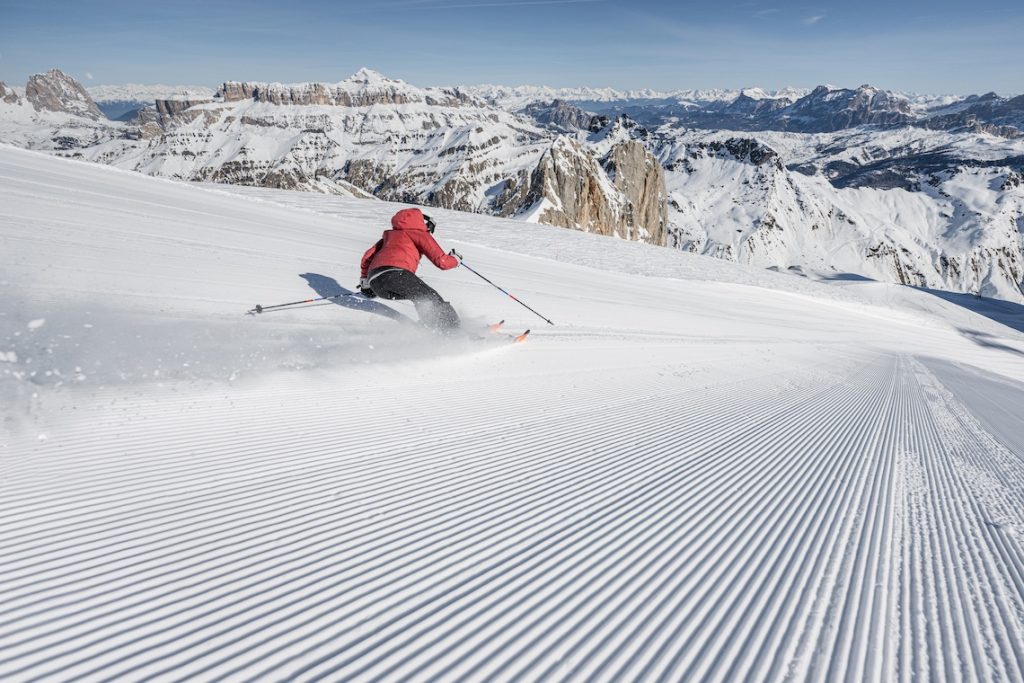
The Sellaronda route covers the four Ladin valleys of the Sella group: Val Gardena, Alta Badia, Arabba, and Val di Fassa. At 44km long (of which 23km are on slopes), the route is easily tackled in a day.
You can complete it either clockwise or counterclockwise, and whichever direction you choose, you’ll be treated to phenomenal pistes with seamless lift links, so you’ll only have to walk for a few metres on the entire route. The rest of the time you’ll be cruising down blue and red slopes with a few steeper sections thrown in, making it perfect for intermediate skiers.
Factor in about six hours to complete the route, and we recommend starting before 10am to give yourself enough time to complete the route and get back on the lift in time without rushing. Heading clockwise (follow the orange sign) provides varied slopes and fewer lift rides, while the counterclockwise route is quieter and skips some of the slightly trickier terrain. It also avoids any drag lifts, making it more attractive for snowboarders.
Grande-Guerra ski tour
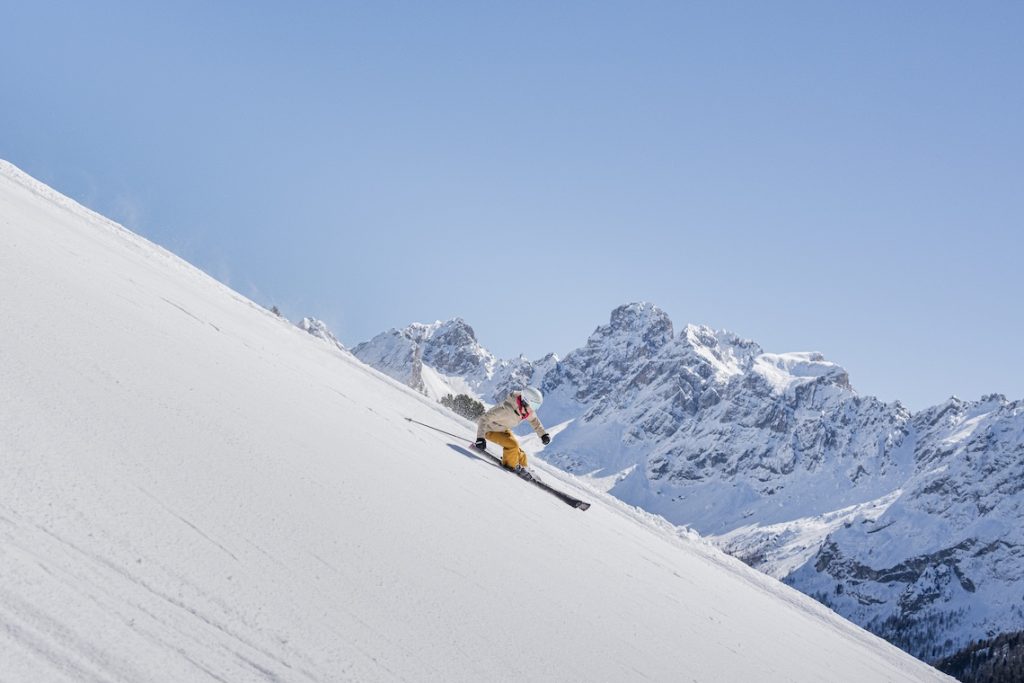
If you’ve got the ski touring itch, check out the Grande-Guerra route. This 80-km route circles the Col di Lana, a mountain which saw fierce fighting between Italian and Austo-Hungarian forces in the First World War, including huge explosions as each side sought to blow up the other’s positions.
Since it takes 6-8 hours, you’ll need to be an experienced skier to complete it in one day. We’d suggest taking two days to follow the route, giving yourself more time to explore these historic battlegrounds, along with optional sections like the La Bellunese 12km downhill slope from the top of Marmolada (the longest slope in the Dolomites) and the Gran Risa world cup slope in Alta Badia, not to mention the seven different ski areas and three Italian provinces you’ll pass through along the way.
This epic route features some of the most famous and beautiful peaks in the Dolomites, and with two ski buses and a horse-drawn lift, it’s a proper odyssey through the regions. The Civetta ski resort is a popular starting point for the tour, but you can set off from San Cassiano, Corvara, Arabba, or Malga Ciapela. We suggest following the route counterclockwise for the most time on skis.
Following either of these ski routes is an incredible journey through one of the world’s most beautiful mountain ranges, with world-class skiing, fascinating history, alpine hospitality with Italian flair, and tales of myth and legend that make it much more than just a ski destination. In the Dolomites, skiing is an adventure.
How to get there
The best airports to fly to from the UK are Venice, Innsbruck, and Verona, depending on which area of the Dolomites you want to base yourself in. All of these cities have good train and bus connections into the Dolomites for the rest of your journey. Alternatively, there are private ski transfers available, which you can often share to cut down the cost.
Where to stay
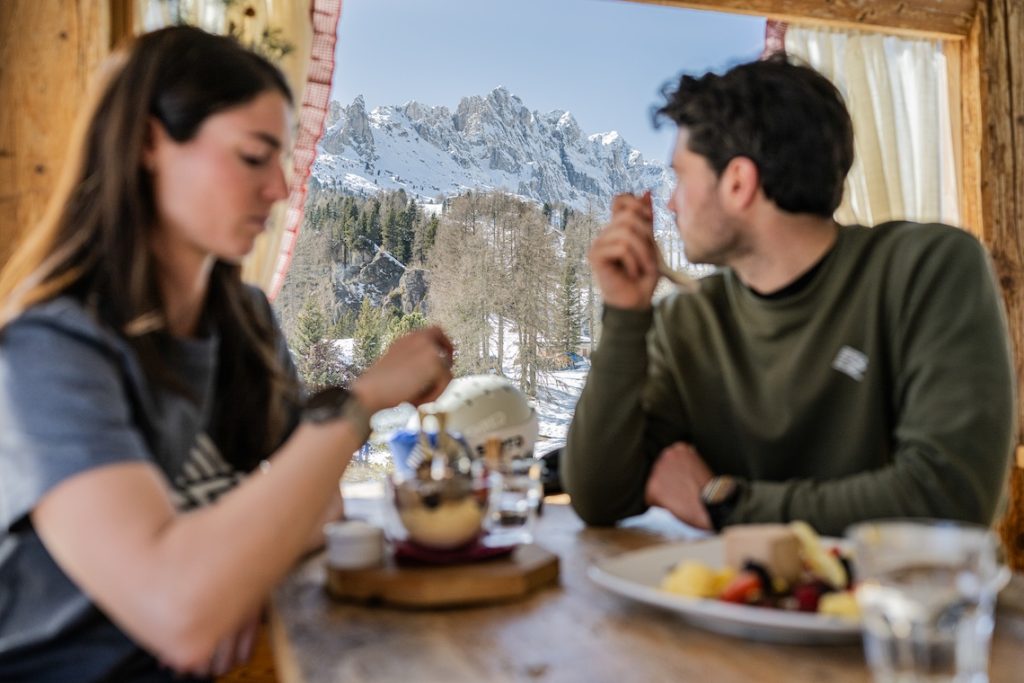
With a dozen ski resorts in the Dolomiti Superski region, you’re spoilt for choice when it comes to accommodation, whether you’re looking for a quiet, family-friendly stay or somewhere with a thriving après-ski scene. Each resort is well-equipped with wellness centres, spas, and saunas, and you’ll be eating well at the variety of gourmet restaurants and traditional huts serving a rich variety of food.
Ski passes
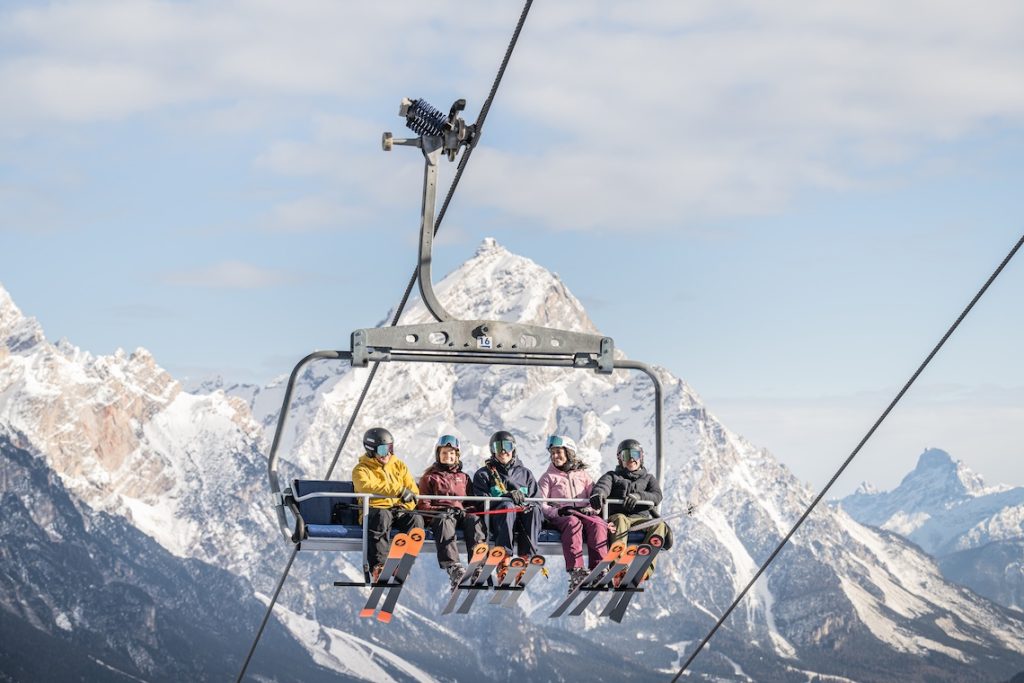
To access the entirety of the region, with its 1,200km of slopes, you only need a single Dolomiti Superski Skipass. In the high season, it costs €86 (£75) a day, with discounts available for pre-booking.
When to go
The natural conditions combined with a high standard of snowmaking and slope management ensures a long season in the Dolomites. The peak season is January through to mid-March, but it can start as early as December and continue right through to April.
Plan your ski holiday in the Dolomites today
Head on over to the Dolomiti Superski website to find all the information you need to plan your ski holiday in the Dolomites this winter, including passes, accommodation, resorts, and travel.